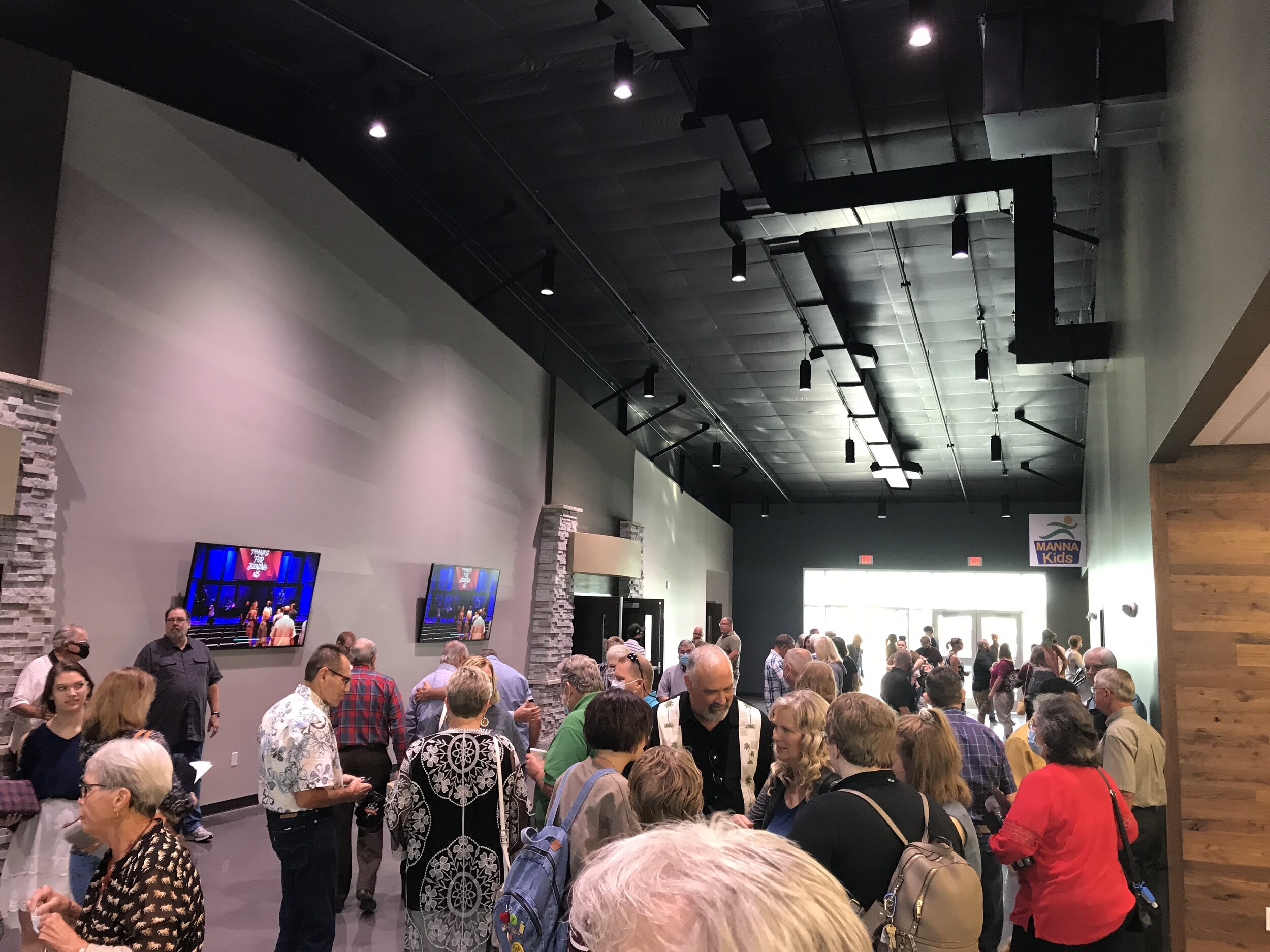
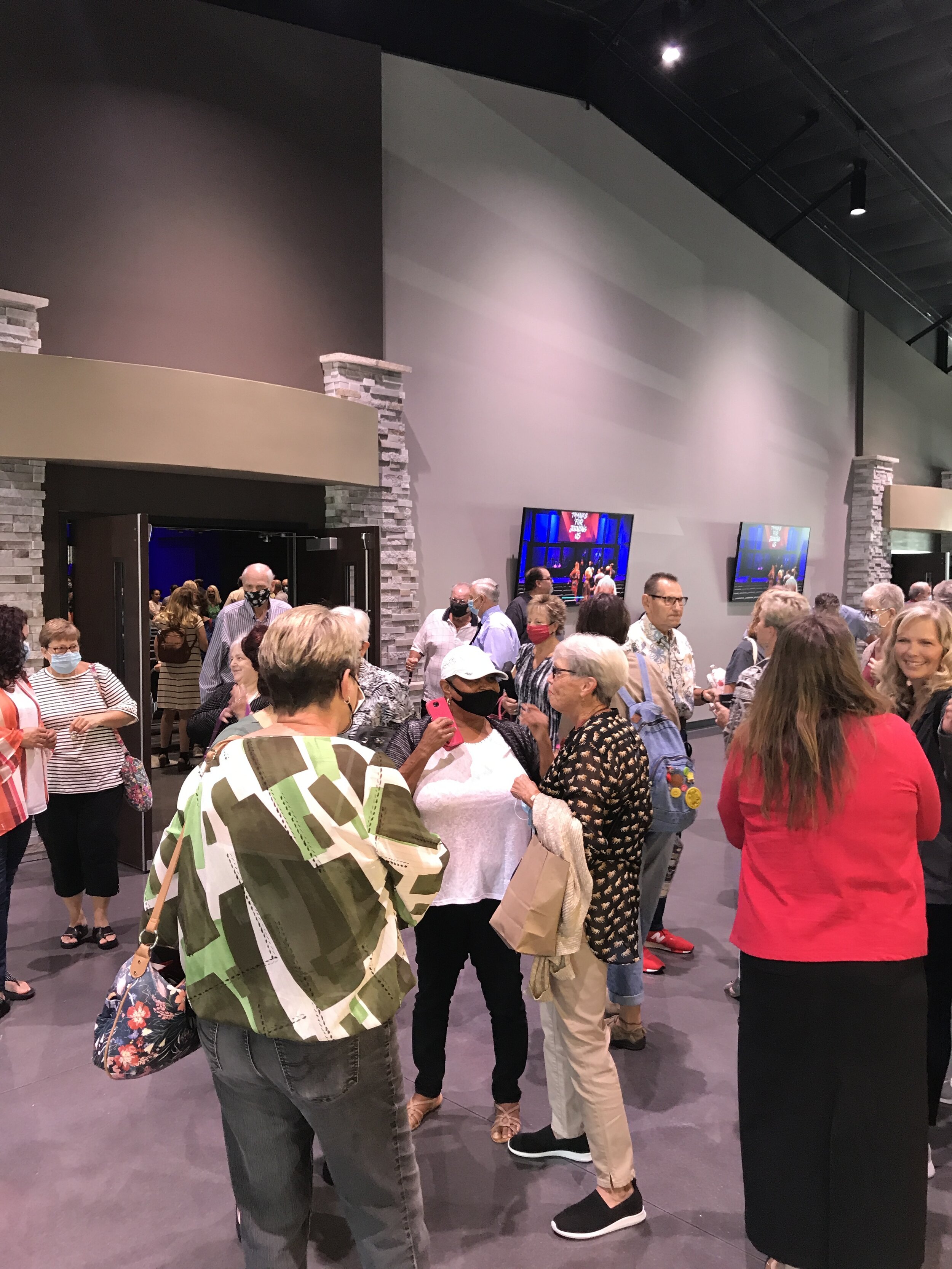
Pandemic Predicament: Church Design – Part 2 of 5 Considerations for the Lobby & Common Areas:
The COVID-19 pandemic has redefined daily life. From working environments to required face coverings to food delivery to entertainment, the effects and aftermath of social distancing may be here to stay for a very long time. These are unchartered waters and architecturally speaking, will no doubt have an impact on the design of future gathering spaces. Therefore, it is incumbent on the architectural community to look for ways to not only mitigate virus transmission, but to design safer gathering spaces.
Continue reading
Pandemic Predicament: Church Design – Part 2 of 5 Considerations for the Church Property
The COVID-19 pandemic has redefined daily life. From working environments to required face coverings to food delivery to entertainment, the effects and aftermath of social distancing may be here to stay for a very long time. These are unchartered waters and architecturally speaking, will no doubt have an impact on the design of future gathering spaces. Therefore, it is incumbent on the architectural community to look for ways to not only mitigate virus transmission, but to design safer gathering spaces.
Continue reading
The COVID-19 pandemic has redefined daily life. From working environments to required face coverings to food delivery to entertainment, the effects and aftermath of social distancing may be here for a very long time. These are uncharted waters and architecturally speaking, will no doubt have an impact on the design of future gathering spaces. Therefore, it is incumbent on the architectural community to look for ways to not only mitigate virus transmission, but to design safer gathering spaces.
As the current stay-in-place culture wears on (and wears thin), people are understandably looking for different ways to cope. Heading outside is becoming a popular way to reduce cabin fever. From community concerts held outdoors, musicians performing in courtyards at restaurants and bars, drive-in theaters, and even pop-up concerts on front yards, socially responsible activities happening outside are a growing trend.
As churches begin to reopen, health and safety guidelines are in place to help prevent new cases of COVID-19. But beyond best-practices of hand sanitizer stations, deep cleaning, and seating people six feet apart, the act of taking worship outside is worth considering.
Continue reading
Community Church is a bible-based evangelical Christian church with two campus locations, Greensburg, IN and Batesville, IN. The church selected Mantel Teter to serve ministry and space needs at both campuses, with a major focus on the Batesville campus. Unique to this campus is its location context. The church purchased an early circa 1900’s building with historical value in the downtown core of Batesville.
Christ Community Church’s Downtown Campus is currently occupying leased space located in the Crossroads District, the center of the arts community in Downtown Kansas City. The church is an intergenerational collection of individuals and families from different communities purposed for the flourishing of Downtown KC.
As the church began to run out of space, they began searching for other facility options that would better accommodate their current and future needs. After researching several different location, the church identified a 2-story 20,000 square foot building located at 208 West 19th Street in Kansas City, Missouri as a potential new home.
Continue reading
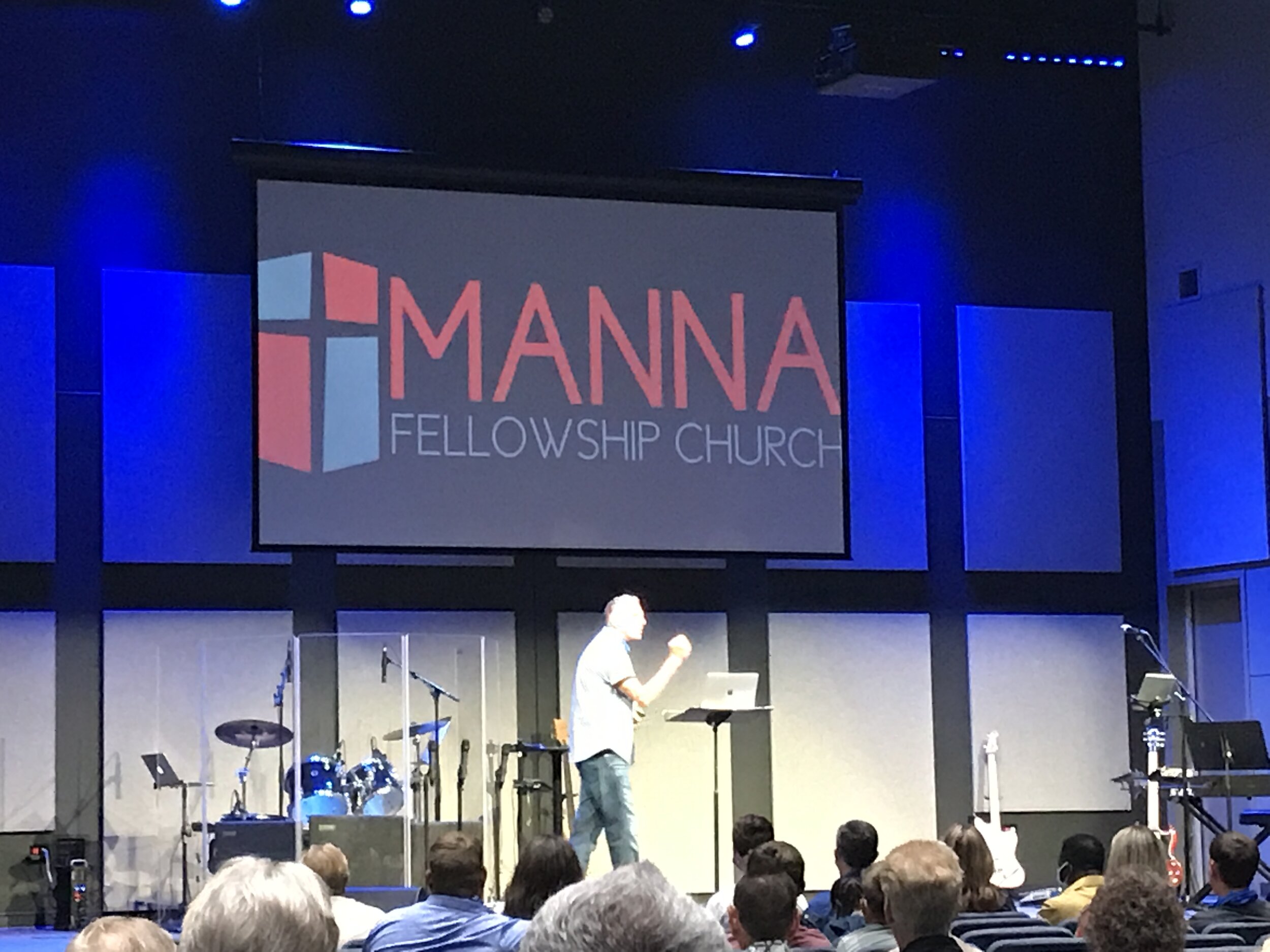
Kansas City, Missouri’s Crosspointe Baptist Church joined forces with Belton, Missouri’s Manna Fellowship Church, who relocated to a leased facility near the intersection of 58 highway and 291 highway east of Raymore, Missouri. The church’s mission is to “…elevate God in our personal lives, church, community and world.
The newly formed church experienced explosive growth that put pressure on the facility’s ability to support ministry. With the desire to provide facilities that would support further growth, the church selected Mantel Teter as their partner in discovering the facility type, size and location that would meet their immediate and future needs.
Continue reading
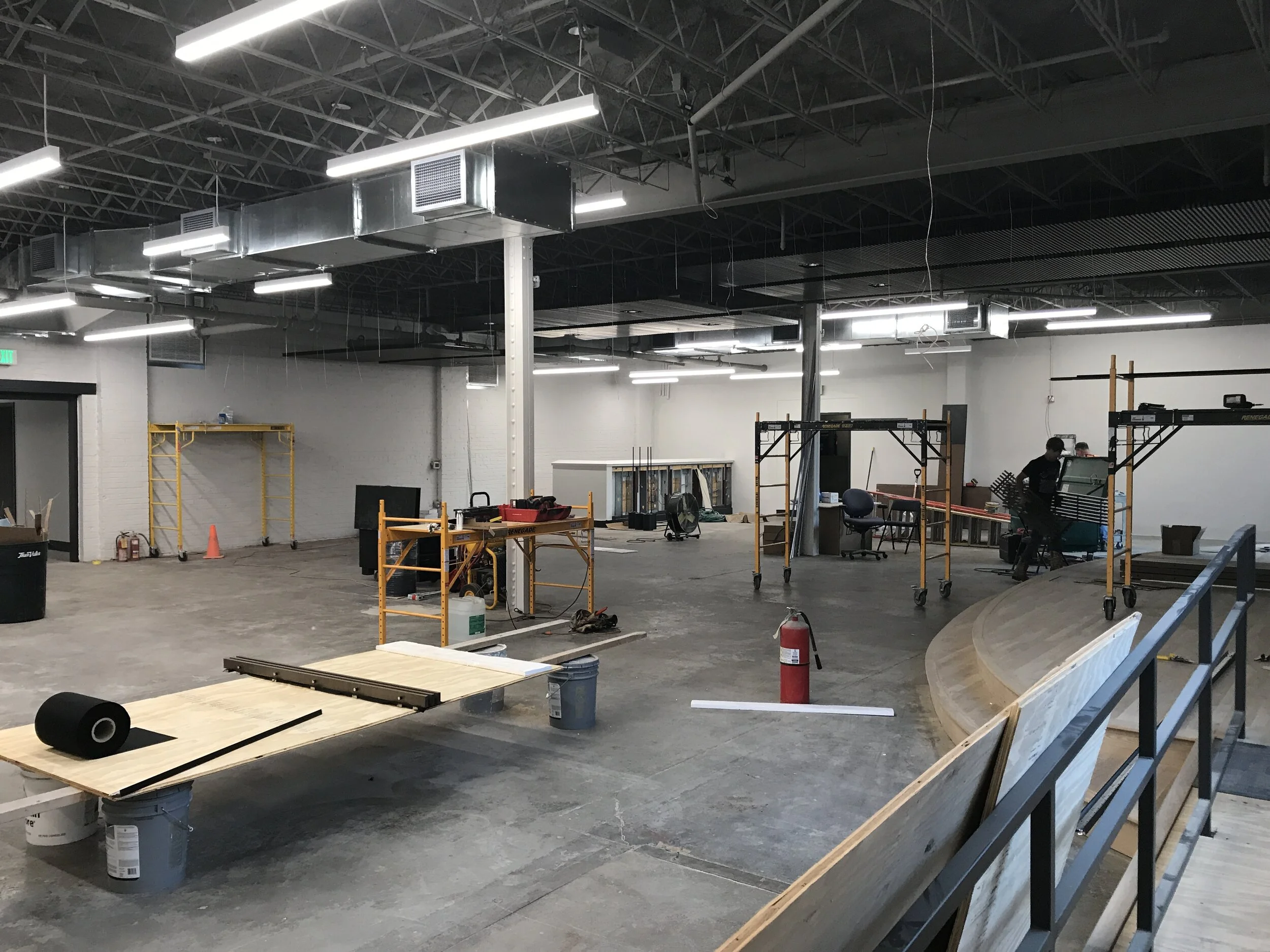
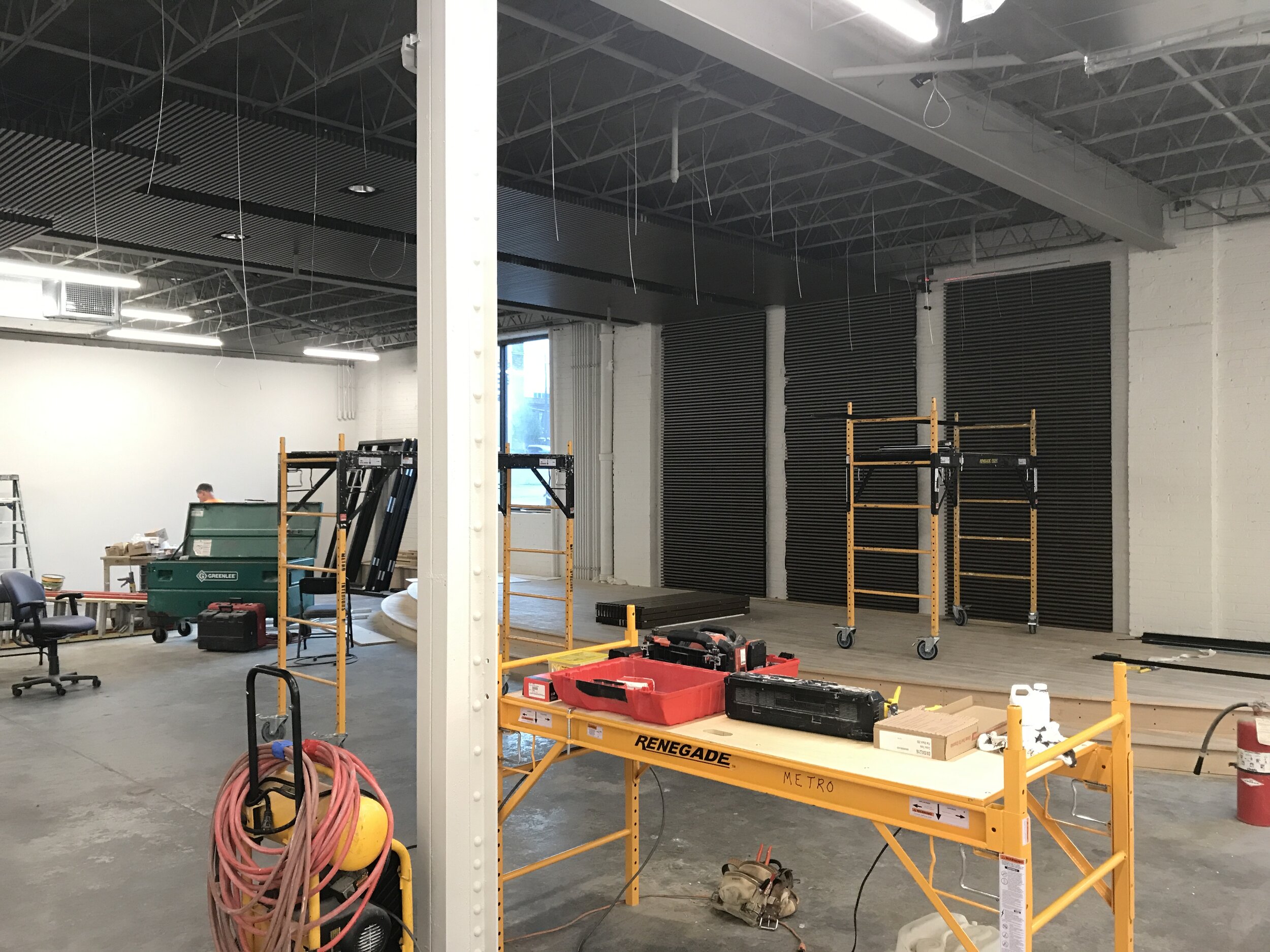
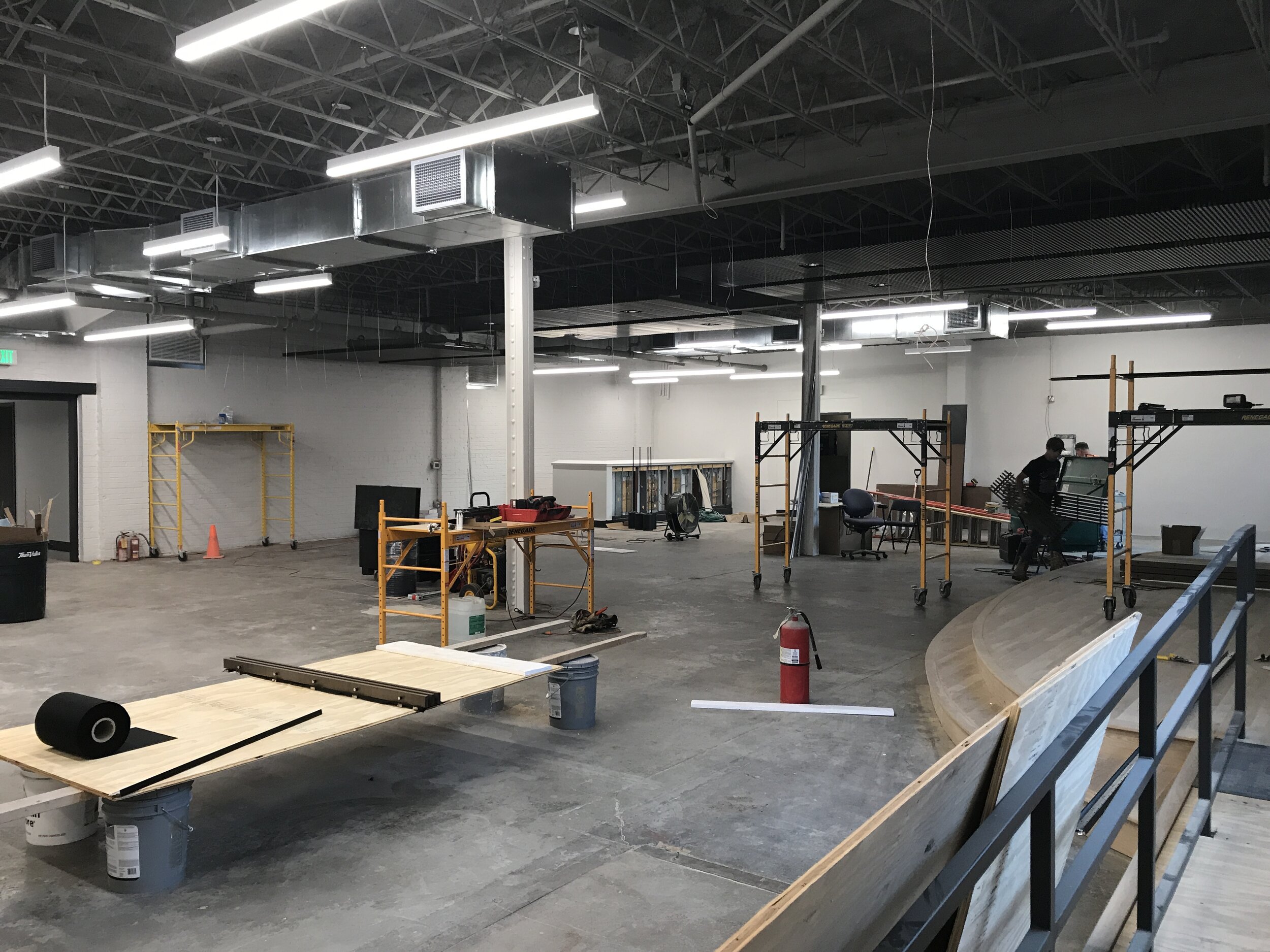
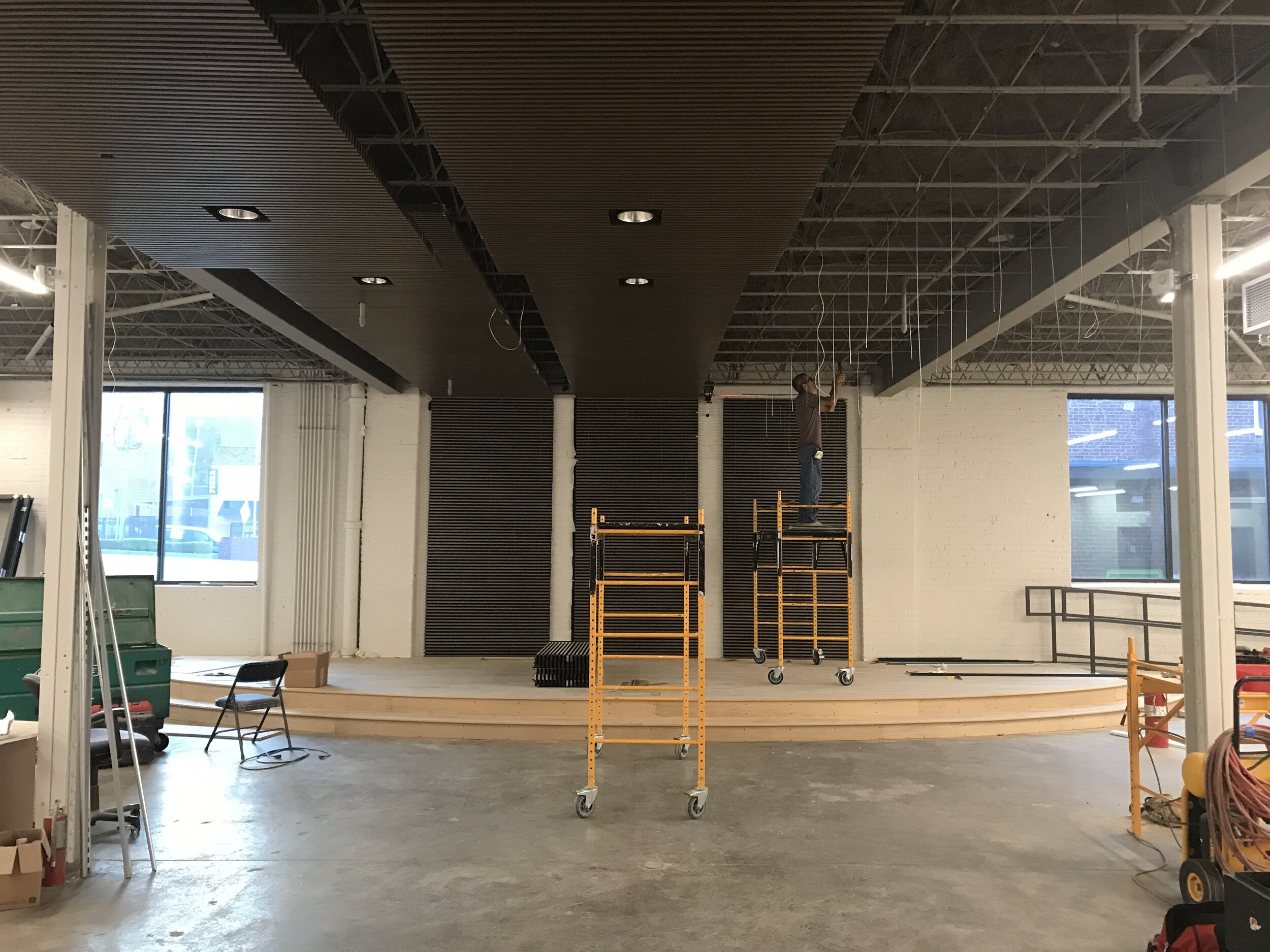
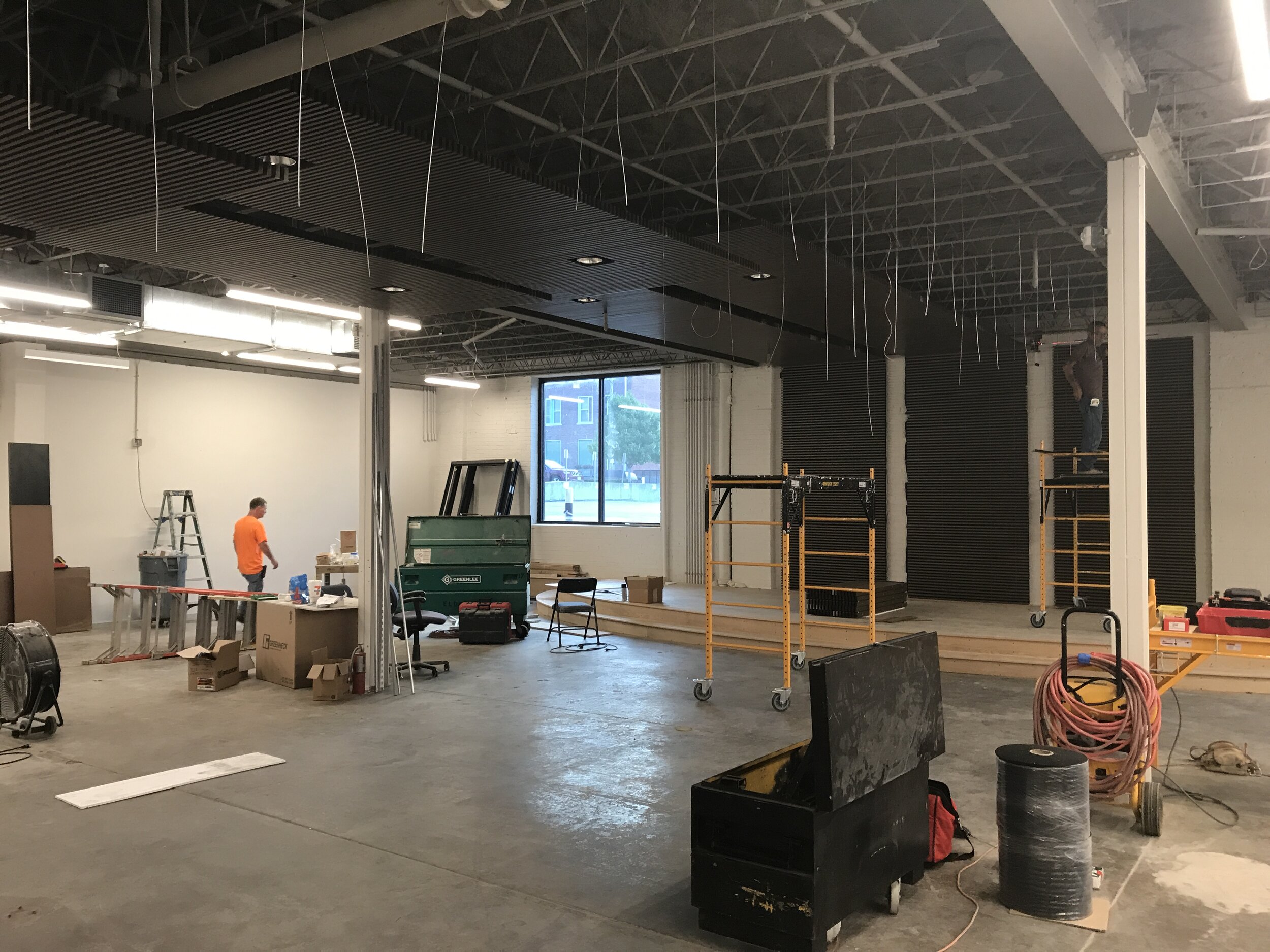
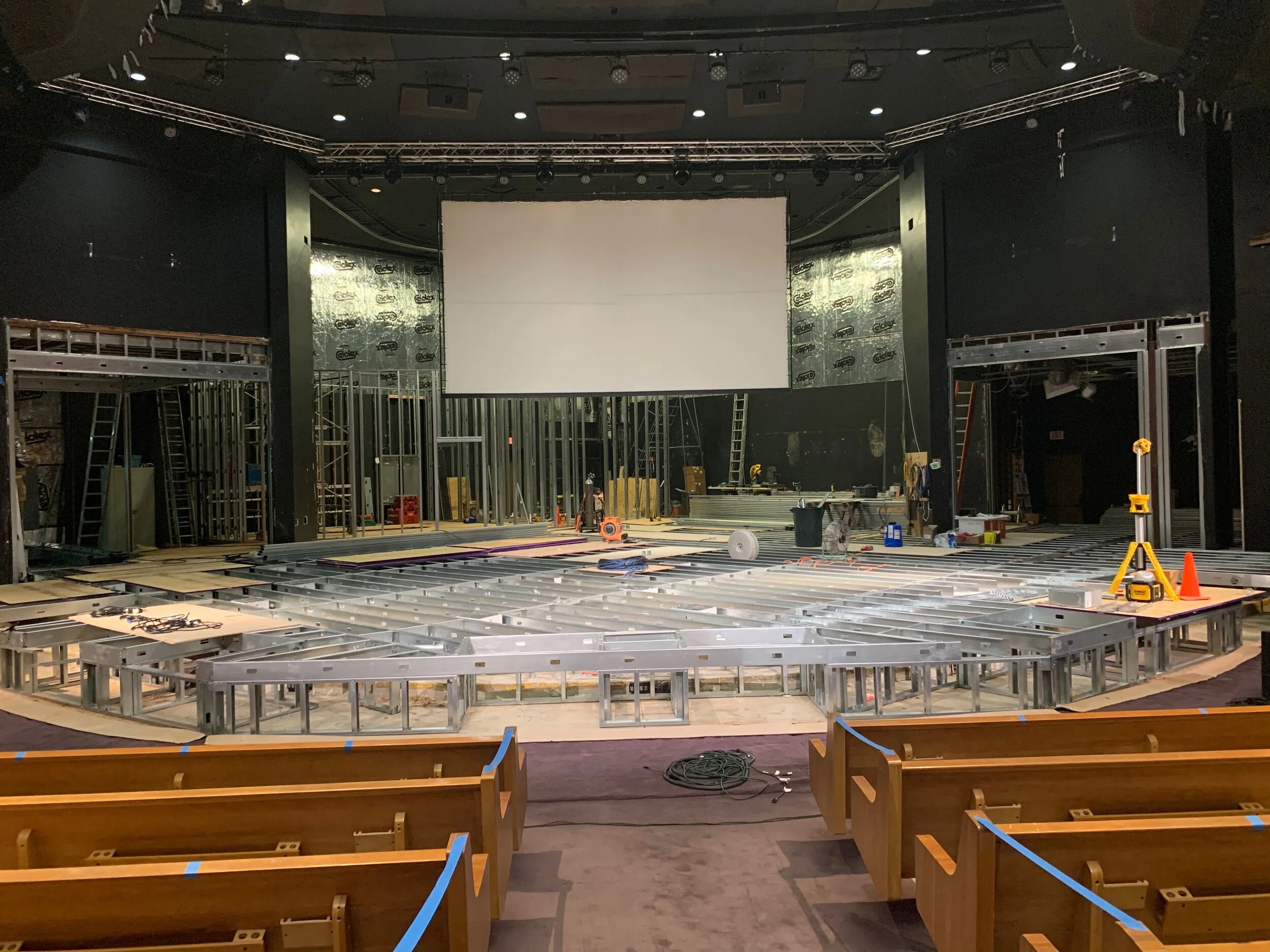
Taking advantage of the current environment surrounding COVID-19, with church services being held online only, Evangel Church has begun construction on their platform and back-of-house remodel. The new elevated platform is backed with a 36’ wide video screen wall, with updated sound system and room acoustics. The back of house now includes a green room, production suite, and ample side-wing storage with direct access to the platform. The goal is to be complete when services are once again held onsite!
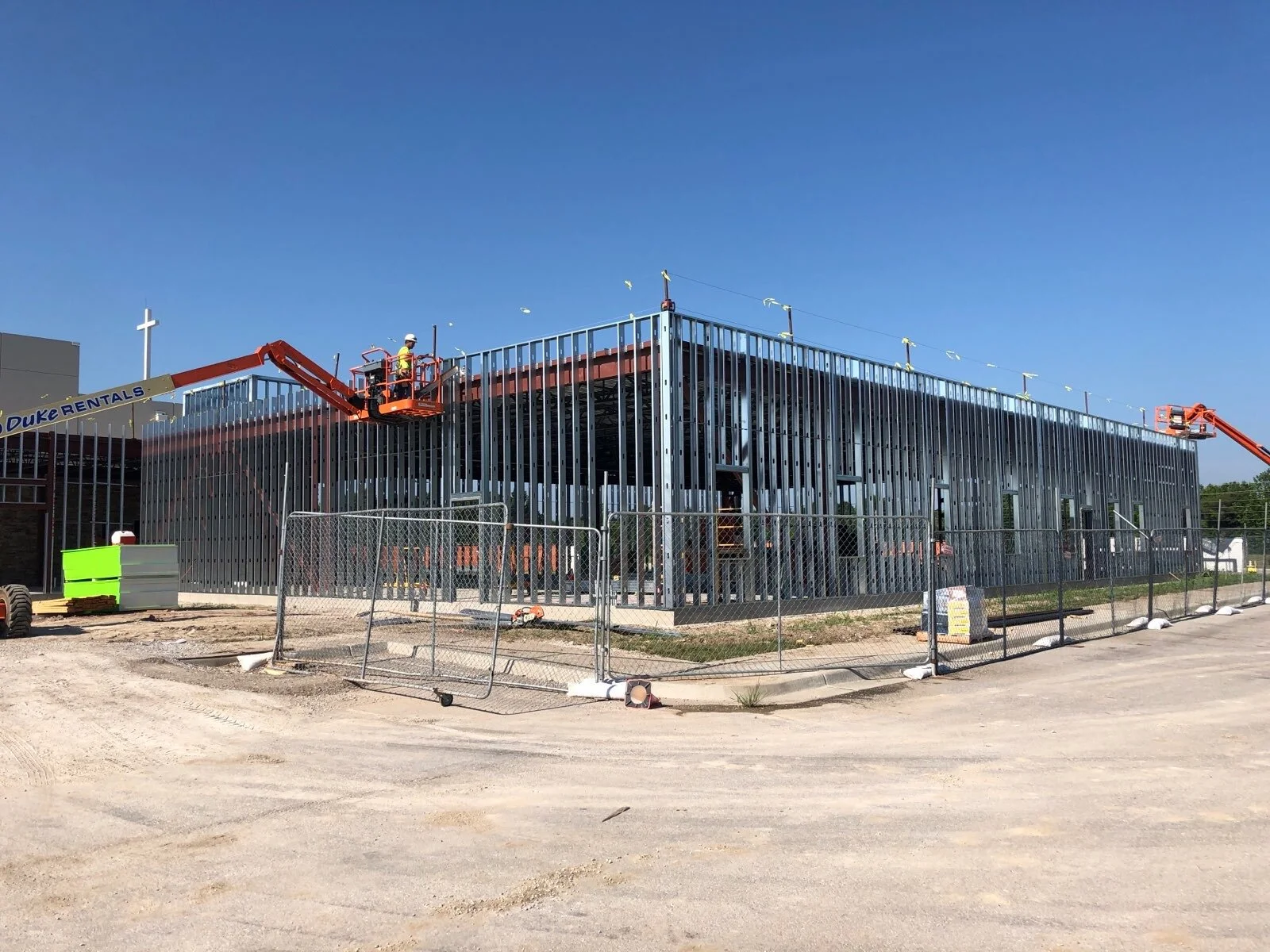
Construction is well under way at The Summit! The church is very excited to see steel erection for their Phase 2 building addition, which includes a chapel space, offices and meeting rooms. With perimeter walls going up, the addition is starting to take shape! Construction is scheduled to be completed near the end of this year. The project's contractor is A.L. Huber Construction.
Theatrical lighting gets much of the attention in the design of church and worship spaces. But architectural lighting (including house lights in performance spaces), both functional and aesthetic, deserves the spotlight, too.
Architectural lighting is designed to blend seamlessly within any space, such as providing focused downlight or accenting certain areas of a room. This lighting can be comprised of recessed, track or surface-type light fixtures that add a personalized touch or complement specific characteristics of a church’s design.
Church.Design queried church architects and a manufacturer or two to learn about the role and offerings of architectural lighting in lighting projects.
Continue reading
When architect David Evans was asked to renovate the Antioch Bible Baptist Church in Gladstone, Mo., he was given the task of transforming the three-building campus into a new seamless space featuring a state-of-the-art children’s center. “Our first task was to form a leadership committee [that] would make the project a reality, comprised of people with specific areas of expertise such as construction, finance or business,” says Evans, president of Kansas City, Mo.-based architectural firm Mantel Teter. “Stylistically the structure was not relevant, and we required many voices, from the architect to the pastor.”
The centerpiece of the new space was a children’s ministry building, designed to create awareness and attract families to the church. There was a need for expansive spaces that catered to large groups and encouraged community fellowship. The new lobby voiced “the art of arrival” as a space for connecting and promoting connection and conversation. The expansion was welcome--the new design greeted nearly 1,000 congregants on Sunday.
Continue reading
Blue Springs Christian Church strives to be responsive to the spiritual and physical needs of the Blue Springs, Missouri area and others around the world. As the face of ministry changes, the church places emphasis on re-aligning their facility environments with felt needs in the community.
Over the last several years, Blue Springs Christian church has been faced with challenges presented by outdated facilities and less than adequate spaces in which to do ministry. Recognizing the importance of offering a fresh and relevant worship experience to continue their growth, the church selected Mantel Teter to help them explore options to update their existing worship space, platform, and back-of-house areas.
Continue reading
Skyler Phelps, AIA, senior vice president of Kansas City, Mo.-based Mantel Teter, says the “new normal” is not that different than how the company has been working with its out-of-town clients over the years.
“In this uncertain time, we are continuing to utilize web conferencing technology to advance the development of facility improvement projects, which prepares churches to bring needed ministry space online as quickly as possible,” he says. “People gravitate to churches during difficult times. Churches that continue planning processes will be better positioned to meet the felt needs of the communities they serve.”
Read the full article